
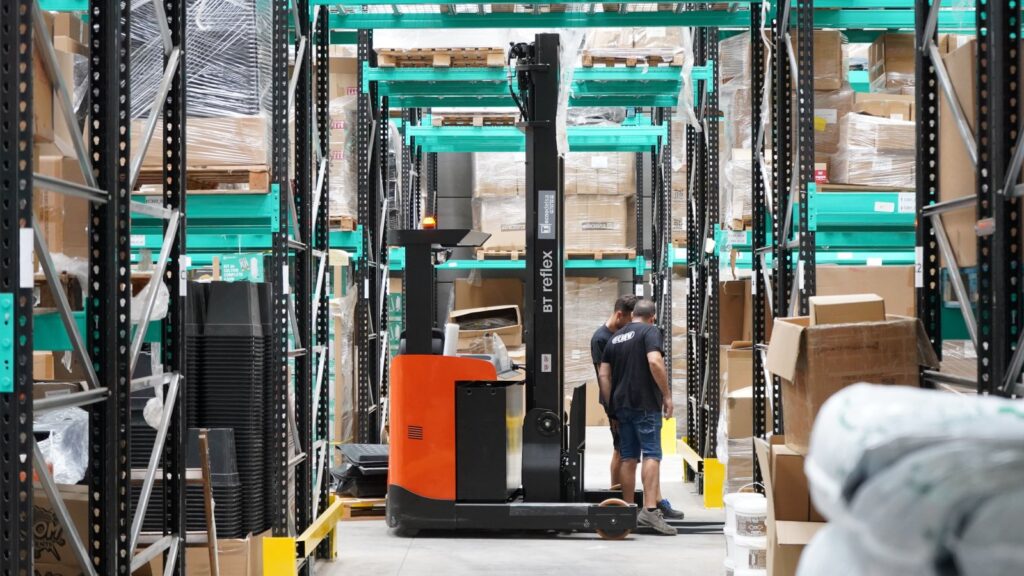
Choosing between a public warehouse and a private warehouse shapes how efficiently your business stores, moves, and fulfills inventory. A public warehouse rents shared space to multiple businesses on flexible terms, while a private warehouse is owned or leased exclusively by a single company for dedicated use.
Table of Contents
- What Public and Private Warehousing Actually Mean
- Cost Structure: How Each Model Charges You
- Control, Flexibility, and Scalability
- Who Should Use Each Model
- Things to Know
- Make the Right Warehousing Decision for Your Business
- Frequently Asked Questions
What Public and Private Warehousing Actually Mean
The warehousing industry is larger than most businesses realize. According to IMARC Group (2025), the global warehousing and storage market was valued at USD 542.2 billion in 2025, with projections reaching USD 728.7 billion by 2034. A separate estimate from Grand View Research (2026) pegs the broader warehousing market even higher, at $1,155.3 billion in 2025, expected to grow to $2,298.4 billion by 2033 at a CAGR of 9.2%. This scale reflects just how central warehousing decisions are to supply chains of every size.
Within this market, private warehouses currently hold a commanding 65.4% market share as of 2025, according to IMARC Group. That reflects strong enterprise preference for dedicated, automation-integrated facilities. Public warehousing, which accounts for roughly 34.6% of the market, still represents a substantial and growing segment. According to IBISWorld (2023), there are 19,439 public storage and warehousing businesses in the United States, and the sector generated $34 billion in revenue in 2022. The American Warehouses Q1 2024 Report projects the public warehousing market to grow by nearly $60 billion, at a CAGR of 5.6% through 2028.
Understanding these two models starts with their operational structure. A public warehouse is operated by a third-party logistics (3PL) provider that leases space, labor, and services to multiple clients simultaneously. Your inventory shares a facility with other businesses, but is tracked and managed separately. A private warehouse is controlled entirely by one company, either through ownership or a long-term lease, with staff, systems, and operations tailored exclusively to that business.
Cost Structure: How Each Model Charges You
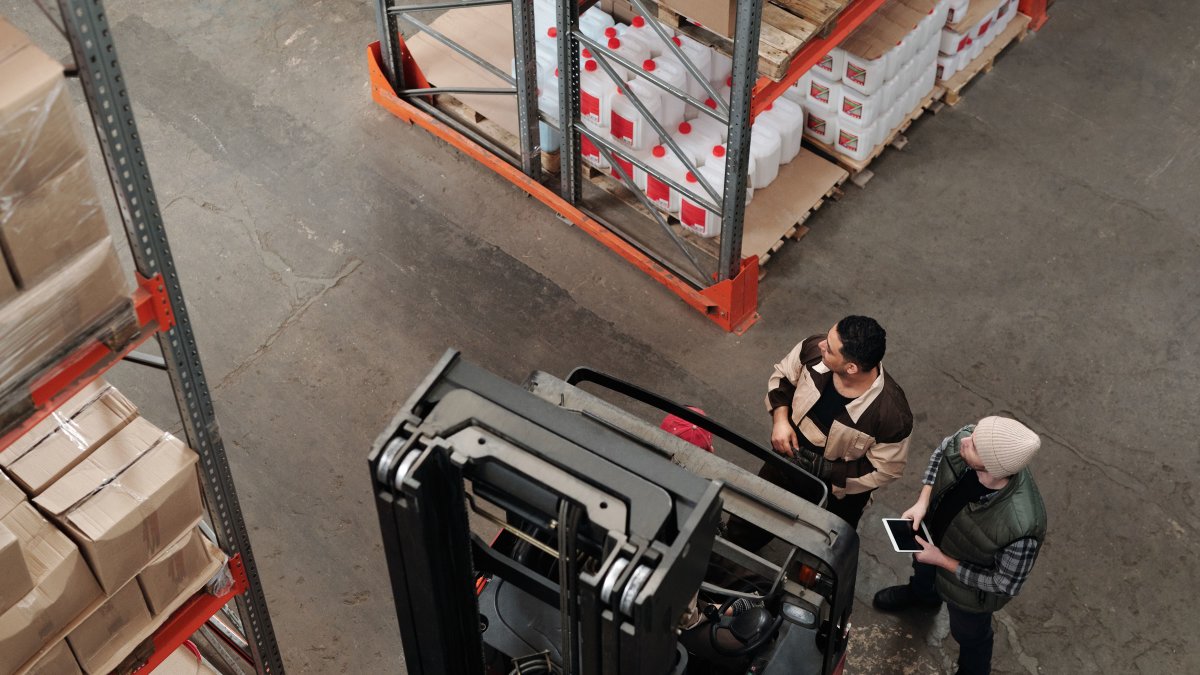
Cost is often the deciding factor, and the two models operate on fundamentally different financial logic.
With a public warehouse, you pay for what you use. Fees are typically broken down into:
- Storage fees: Charged per pallet, per square foot, or per unit, usually monthly
- Handling fees: Inbound receiving and outbound shipping labor costs
- Value-added service fees: Pick-and-pack, kitting, labeling, or returns processing
This pay-as-you-go structure means your warehousing costs scale with your volume. During slow seasons, you pay less. During peak periods, you simply use more capacity without a capital commitment. For businesses focused on supply chain management basics, this flexibility is a meaningful advantage when cash flow and inventory cycles are unpredictable.
Private warehousing carries substantially higher fixed costs. You bear the expense of the lease or mortgage, utilities, staffing, equipment, insurance, and technology infrastructure, regardless of how much inventory you hold. These costs make private warehousing economically viable only when you have consistent, high-volume throughput that justifies the overhead. The tradeoff is full control: you set the layout, operating hours, security protocols, and technology stack without negotiating with a third party.
Factor | Public Warehouse | Private Warehouse |
Upfront cost | Low (no capital required) | High (lease, buildout, equipment) |
Ongoing cost | Variable (pay per use) | Fixed (staffing, utilities, lease) |
Scalability | High (scale up/down quickly) | Low (constrained by facility size) |
Control over operations | Limited (provider’s processes) | Full (your systems, your rules) |
Technology integration | Provider’s WMS | Custom or proprietary WMS |
Best for | SMBs, seasonal, growing brands | Large enterprises, stable volume |
Control, Flexibility, and Scalability
Beyond cost, the choice between public warehouse vs private warehouse comes down to how much operational control your business needs.
Private warehouses give you the ability to implement highly customized workflows, from proprietary inventory management systems to specialized handling equipment for fragile or regulated goods. If your product line requires unique storage conditions (refrigerated, bonded, or hazmat-compliant), owning or leasing your own facility means those requirements are built in from day one.
Public warehouses sacrifice some customization in exchange for immediate access to established infrastructure. A quality 3PL provider will already have warehouse management systems, barcode scanning, and carrier integrations in place. Applying inventory management best practices becomes more accessible for smaller businesses that can’t afford to build those systems internally.
Scalability is where public warehouses have a clear structural advantage. When a seasonal retailer needs to triple its pallet count in November and cut it back in January, a public warehouse accommodates that without penalty. A private facility would either sit underutilized for months or be too small to handle the peak. It is also worth noting that the 3PL market supporting public warehousing is expanding fast: the US 3PL market is valued to increase by USD 146.8 billion, at a CAGR of 8.4% from 2025 to 2030, according to Technavio (2026). That growth signals more options and competitive pricing for businesses relying on shared warehousing.
Who Should Use Each Model

Choose a public warehouse if:
- You are a startup or mid-sized business with variable inventory levels
- You want to avoid large capital commitments
- You need services like cross-docking, returns handling, or same-day fulfillment without building your own operation
- You are testing a new market or product category
Choose a private warehouse if:
- You ship consistently high volumes with predictable demand
- Your products require proprietary handling, storage conditions, or security
- You have the capital to invest in long-term infrastructure
- Your brand or regulatory environment demands full operational control
It is also worth distinguishing warehousing from fulfillment operations. Understanding the fulfillment center vs warehouse difference matters here because some businesses actually need consumer order processing capabilities, not just bulk storage. Similarly, businesses building out their shipping operations should evaluate shipping software for small business to connect carrier rates and tracking with whichever warehousing model they choose.
Things to Know
- Hybrid models exist. Many businesses use a private facility for their primary distribution center while supplementing with public warehouse space during peak seasons.
- 3PL contracts vary widely. Storage minimums, rate structures, and contract lengths differ significantly between providers. Always compare total landed costs, not just storage rates.
- Location matters more than ownership. A well-positioned public warehouse near a major port or urban center can outperform a private facility located far from your customer base.
- Technology integration is a real factor. Public warehouses run their own warehouse management systems. Confirm that any 3PL provider can integrate with your existing e-commerce platforms before signing.
- Bonded and FTZ options exist in both models. If you import international freight, ask whether the warehouse offers bonded or Foreign Trade Zone status for customs deferral.
Make the Right Warehousing Decision for Your Business
Your warehousing model directly affects your fulfillment speed, overhead costs, and capacity to grow. If you are weighing the public warehouse vs private warehouse decision and need a flexible, professionally managed solution in the tri-state area, contact 3PL Warehouse By Best to explore options tailored to your actual volume, geography, and service requirements. We offer inventory management with real-time tracking, cross-docking, on-demand storage, same-day order fulfillment, returns handling, and bonded and FTZ warehousing across the NYC, NJ, and CT region. Request a free estimate today and get a clear cost breakdown with no commitment required.
Frequently Asked Questions
Q: Is a public warehouse the same as a 3PL warehouse?
In most practical cases, yes: public warehouses are operated by 3PL providers who offer storage and fulfillment services to multiple clients.
The terms are often used interchangeably, though technically “public warehouse” refers to the access model (open to multiple tenants), while “3PL” refers to the outsourced logistics service relationship. Most 3PL providers operate public warehouse facilities.
Q: What are the hidden costs of a public warehouse?
Beyond base storage rates, businesses often encounter fees for receiving, handling, special projects, account minimums, and technology access.
Reviewing a provider’s full rate card before signing is essential. Some 3PLs charge separately for inbound receiving, pallet labels, cycle counts, and returns processing, costs that add up quickly at volume.
Q: How much space do I need before a private warehouse makes financial sense?
Most logistics consultants suggest that private warehousing becomes cost-competitive when a business consistently occupies more than 100,000 square feet or operates multiple dedicated shifts.
Below that threshold, the fixed overhead of staffing, equipment, and facility management typically exceeds what a public warehouse would charge for equivalent service levels.
Q: Can I switch from a public warehouse to a private one later?
Yes, and many businesses do exactly that as they scale, starting with a 3PL and transitioning to a private facility once volume justifies the investment.
The key consideration is timing. Moving inventory mid-season or during a peak period carries operational risk. Plan the transition during a slow cycle and allow several months for setup, staffing, and system integration.
Q: What should I look for when evaluating a public warehouse provider?
Prioritize real-time inventory visibility, clear SLA commitments on order accuracy and processing speed, and verified experience with your product category.
Ask about their WMS capabilities, carrier relationships, peak-season capacity, and any relevant certifications such as bonded status or FTZ designation. References from existing clients in similar industries are among the most reliable indicators of actual performance.