

Shipping software for small business helps owners automate label creation, compare carrier rates, and track packages without manual data entry. Moreover, the right platform reduces per-shipment costs and frees up hours every week that would otherwise go to repetitive logistics tasks.
Key Takeaways
- Shipping software automates carrier rate comparison, label printing, and tracking notifications to reduce manual work.
- Look for native integrations with your storefront (Shopify, WooCommerce, Etsy) before committing to any platform.
- Batch label printing and discounted carrier rates are two of the highest-value features for small businesses shipping more than 20 orders per week.
- Software alone has limits: as order volume grows, pairing it with a 3PL provider significantly improves fulfillment speed and accuracy.
- Businesses in the tri-state area (New York, New Jersey, Connecticut) can tap 3PL Warehouse By Best for same-day order processing and real-time inventory tracking.
Table of Contents
- What Shipping Software Actually Does
- Core Shipping Software Features Worth Paying For
- Comparing the Most Common Shipping Software Platforms
- Things to Know
- When Shipping Software Alone Is Not Enough
- How 3PL Warehouse By Best Fits Into Your Shipping Strategy
- Take Control of Your Shipping Operations Today
- Frequently Asked Questions
What Shipping Software Actually Does
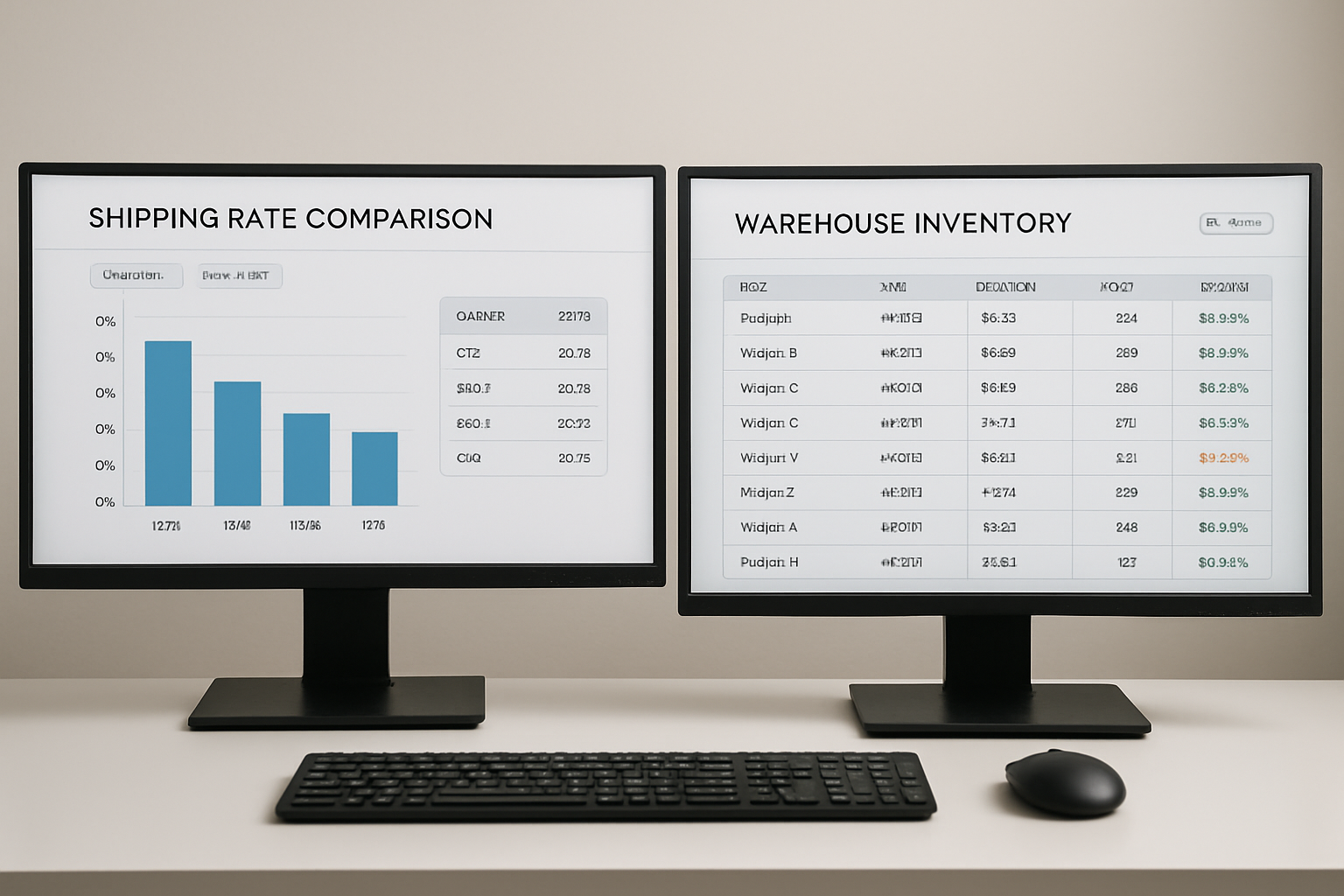
At its core, shipping software connects your sales channels to carriers like UPS, FedEx, USPS, and DHL. When a customer places an order, the platform pulls that order automatically. Additionally, it pre-fills the shipping label and lets you compare live carrier rates before printing. You no longer have to retype addresses, guess at postage, or manually update tracking numbers.
For small businesses shipping out of a garage, home office, or small retail space, this removes one of the biggest operational bottlenecks. Platforms like ShipStation, Shippo, and EasyPost are widely used across the U.S. because they work with popular storefronts including Shopify, WooCommerce, Amazon, Etsy, and BigCommerce.
Each platform charges differently. Some bill per label, others charge a flat monthly fee, and a few offer free tiers for very low volumes.
Core Shipping Software Features Worth Paying For
Not every feature in a shipping platform delivers equal value. Small businesses should focus on what actually saves time and money at their current volume.
Discounted carrier rates: Most platforms negotiate pre-discounted rates with USPS, UPS, and FedEx. For a business shipping packages under 5 lbs, the savings on USPS Priority Mail rates alone can offset the software cost within weeks.
Batch label printing: If you ship more than 20 orders per day, printing labels one at a time is unsustainable. Furthermore, batch printing lets you generate dozens or hundreds of labels in a single click.
Automated rules: These rules assign a carrier and service level based on package weight, destination, or product type without you making that decision each time.
Branded tracking pages: Instead of sending customers to a generic carrier page, branded tracking keeps your logo and messaging visible throughout the post-purchase experience.
Returns portal: A self-service returns process reduces customer service inquiries. In addition, it gives you data on why orders come back.
Inventory sync: Some platforms offer lightweight inventory tracking, though this is where dedicated warehouse management systems and 3PL partners outperform standalone shipping software tools.
Comparing the Most Common Shipping Software Platforms
The table below covers the platforms small U.S. businesses most commonly evaluate. Pricing structures and features change frequently, so always verify current pricing directly with each provider.
| Platform | Best For | Pricing Model | Notable Strength |
|---|---|---|---|
| ShipStation | Multi-channel sellers | Monthly subscription | Deepest carrier and storefront integrations |
| Shippo | Low-volume starters | Pay-per-label or monthly | Simple UI, no monthly minimums |
| EasyPost | Developer-led teams | API usage-based | Custom workflow flexibility |
| Pirateship | USPS-heavy shippers | Free (USPS rates) | Lowest USPS cubic pricing |
| Stamps.com | Home-based sellers | Monthly subscription | USPS-focused with a long track record |
Each platform has a different ceiling. As order volume scales and SKU counts grow, the limitations of pure shipping software become apparent. Therefore, understanding how 3PLs support ecommerce order fulfillment at scale helps put those limitations in context.

Things to Know
- Shipping software does not store, pick, or pack your inventory. It only manages the label and carrier selection part of the process.
- Carrier rate discounts through software can vary significantly. USPS Cubic pricing, available through platforms like Pirateship, can be dramatically cheaper for small, heavy packages than standard retail rates.
- Most platforms charge extra for features like phone support, advanced reporting, or branded tracking pages. Therefore, read the tier breakdown carefully before signing up.
- Address validation tools built into most platforms reduce undeliverable package fees. Carriers charge these fees back to the shipper.
- If you are shipping internationally, look for a platform that handles customs forms automatically. In contrast, manual customs documentation creates a common source of delays.
When Shipping Software Alone Is Not Enough
Shipping software is a tool for execution. However, it does not solve warehouse space problems, pick-and-pack errors, or the complexity that comes with high SKU counts. When your business crosses certain thresholds, the software becomes a bottleneck rather than a solution.
Those thresholds typically include: shipping more than 100 orders per day, managing more than a few hundred SKUs, needing same-day fulfillment consistently, or handling significant return volumes. At these points, the operational question shifts from “which software should we use?” to “who should handle fulfillment altogether?”
Businesses dealing with freight complexity should also understand the difference between storage strategies. For example, cross docking vs traditional warehousing what businesses should know is a decision that affects how quickly inventory moves. Additionally, it determines how much space you need.
Similarly, understanding freight consolidation 3PL efficiency becomes relevant when inbound shipments are large enough to benefit from combined loads.
For businesses selecting freight partners as they scale, reviewing resources like the 20 best freight brokerage companies in 2026 and how to pick the right partner can help narrow the search for the right logistics relationships.
How 3PL Warehouse By Best Fits Into Your Shipping Strategy
3PL Warehouse By Best operates across the NYC tri-state area, covering New York, New Jersey, and Connecticut. For small businesses that have outgrown their shipping software or need a physical fulfillment infrastructure, this is where the real operational leverage comes in.
Their services include real-time inventory management and control, same-day order processing with barcode accuracy, cross-docking for fast-moving freight, short-term and on-demand storage, returns handling, and bonded and FTZ warehousing for businesses managing international freight and customs deferral.
The practical benefit: your shipping software can still be the front-end tool your team uses. Meanwhile, 3PL Warehouse By Best handles the physical side. Orders flow in, get picked and packed accurately, and ship out same day. That combination covers what neither technology nor warehousing can achieve alone.
Take Control of Your Shipping Operations Today
If your current setup is slowing down order processing, creating errors, or simply not scaling with your growth, it is time to look beyond software alone. Contact 3PL Warehouse By Best to discuss fulfillment options across the NYC metro, New Jersey, and Connecticut. Fill out the form to request an estimate and find out exactly how their warehousing and fulfillment services fit your current order volume.
Frequently Asked Questions
Q: What is the best shipping software for small businesses just starting out?
Shippo and Pirateship are both strong starting points for new small businesses due to low or no monthly fees.
Shippo charges per label with no minimums, making it practical if you are shipping fewer than 50 orders per month. Additionally, Pirateship is free and offers some of the lowest USPS rates available, which suits home-based sellers focused on domestic packages.
Q: Does shipping software integrate with Shopify or Etsy?
Yes, most major shipping platforms offer native integrations with Shopify, Etsy, WooCommerce, and Amazon.
ShipStation supports the widest range of integrations. Furthermore, Shippo and Pirateship also connect directly to Shopify and Etsy, pulling orders automatically so you do not have to copy customer details manually.
Q: How much does shipping software cost for a small business?
Costs range from free tiers to $100 or more per month, depending on volume and features.
Entry-level plans from Shippo or Pirateship cost nothing or close to it for low volumes. However, ShipStation starts around $9.99 per month but jumps in price as you add users and order volume. Always verify current pricing directly with the provider.
Q: Can shipping software reduce my carrier rates?
Yes, most platforms negotiate discounted rates with USPS, UPS, and FedEx that are lower than retail counter prices.
USPS Cubic rates through platforms like Pirateship can offer significant savings on small, dense packages. The actual discount depends on the carrier, service type, and the platform’s negotiated agreement.
Q: When should a small business switch from shipping software to a 3PL?
When daily order volume, SKU complexity, or fulfillment speed requirements exceed what you can manage in-house, a 3PL becomes more cost-effective than scaling your own operation.
Signs include consistently missing same-day shipping windows, high pick-and-pack error rates, or running out of physical storage space. Therefore, a 3PL like 3PL Warehouse By Best handles the physical fulfillment infrastructure so you can focus on growing the business.