

Supply chain management is the coordination of all activities involved in sourcing, producing, and delivering a product from raw materials to the end customer. When done well, it reduces costs, improves delivery speed, and gives businesses a meaningful competitive advantage.
Key Takeaways
- Supply chain management covers every step from raw material sourcing to final delivery, and each stage directly affects cost and customer satisfaction.
- Choosing the right logistics partners, including 3PL providers and freight brokers, is one of the highest-impact decisions a growing business can make.
- Warehousing strategy (traditional storage vs. cross-docking) should match your inventory turnover rate and fulfillment model.
- Freight consolidation and smart carrier selection are two of the most practical ways to cut transportation costs without sacrificing reliability.
- Visibility and real-time inventory tracking are no longer optional; they are foundational to a resilient supply chain.
What a Supply Chain Actually Covers
Most people picture a supply chain as a simple line: manufacturer ships to warehouse, warehouse ships to customer. In practice, it is a web of interconnected decisions, relationships, and systems. At its core, supply chain management involves five major domains: planning, sourcing, production, delivery, and returns.
Planning is where demand forecasting happens. Businesses estimate how much product they will need, when they will need it, and where inventory should be positioned geographically.
Sourcing covers supplier selection, contract negotiation, and procurement. A poor sourcing decision compounds downstream, affecting production timelines, product quality, and ultimately customer experience.
Production involves manufacturing or assembly, quality control, and packaging. For businesses that do not manufacture their own goods, this stage is largely managed by their supplier network.
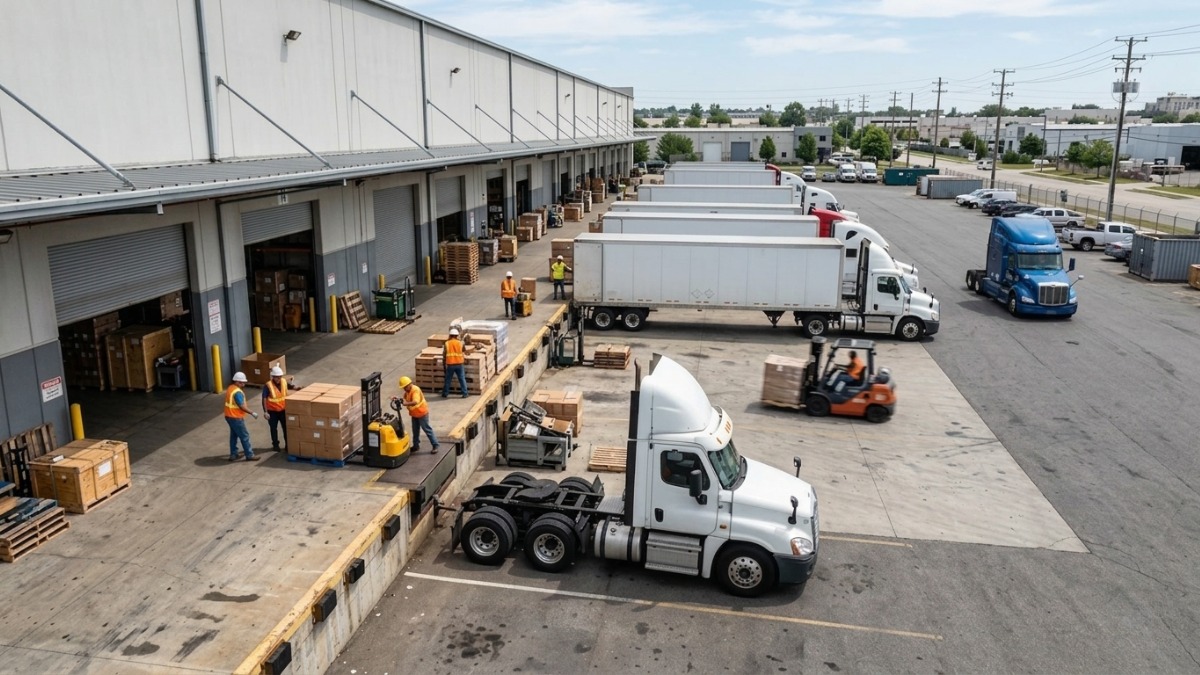
Delivery is where logistics takes center stage. This includes warehousing, transportation mode selection, carrier relationships, and last-mile delivery.
Returns, often called reverse logistics, is the most neglected stage. Yet a streamlined returns process directly affects customer loyalty and inventory recovery rates.

The Role of Warehousing in Your Supply Chain
Warehousing is not just a place to store product. It is an active node in your supply chain that either creates or destroys value depending on how it is managed. The two primary models businesses choose between are traditional warehousing and cross docking vs traditional warehousing what businesses should know.
In traditional warehousing, inventory is received, stored for a period of time, picked, packed, and then shipped. This model suits businesses with less predictable demand or longer product shelf cycles. Cross-docking, by contrast, moves inventory directly from inbound to outbound transportation with minimal or no storage time. It is particularly effective for high-velocity goods where speed to shelf matters more than storage flexibility.
If you are still weighing which approach fits your operation, we recommend reviewing the detailed comparison before committing to a fulfillment strategy.
For ecommerce businesses specifically, warehouse location and fulfillment speed are often the deciding factors in whether a customer returns. Services like those offered by 3PL Logistics at 112 W 38th St in New York’s Garment District include same-day order processing, barcode accuracy controls, and real-time inventory tracking across their tri-state service area covering New York, New Jersey, and Connecticut. These are the operational details that translate directly into better customer experiences.
Transportation and Freight: Where Costs Add Up Fast
Transportation typically accounts for the largest share of total supply chain costs. The decisions you make here, from carrier selection to shipment consolidation, have a direct and measurable impact on margins.
Freight consolidation is one of the most practical cost-reduction tools available to mid-size businesses, and understanding freight consolidation 3pl efficiency helps demonstrate how combining multiple small loads into single, more cost-efficient shipments can improve your bottom line. Instead of shipping multiple small loads separately, consolidation combines shipments heading in the same direction into a single, more cost-efficient load.
Carrier selection is another area where businesses often leave money on the table. Working with a freight broker gives you access to a broader network of carriers and better rate negotiation than most businesses can achieve independently. If you are evaluating broker options, the 20 best freight brokerage companies in 2026 and how to pick the right partner offers a structured framework for making that comparison.
When to Outsource: The Case for 3PL Partnerships
One of the most consequential decisions in supply chain management basics is whether to handle logistics in-house or outsource to a third-party logistics (3PL) provider. There is no universal answer, but there are clear indicators that outsourcing is the right move.
If your business is growing faster than your warehouse and fulfillment infrastructure can scale, you are likely already absorbing hidden costs in the form of delays, errors, and overtime. A 3PL provider absorbs that operational complexity while you focus on sales, product development, and customer relationships.
3PLs also provide flexibility that owned warehouses cannot easily replicate. Services like on-demand and pop-up storage, bonded warehousing for international freight, and FTZ (Foreign Trade Zone) capabilities give businesses access to infrastructure that would cost significantly more to build independently.
For ecommerce sellers specifically, understanding how 3pls support ecommerce order fulfillment at scale is one of the clearest ways to evaluate whether outsourcing makes financial and operational sense for your current growth stage.

Things to Know
- Inventory visibility is a prerequisite, not a luxury. Without real-time tracking, businesses cannot make accurate replenishment decisions or respond to demand shifts quickly.
- Lead times are not fixed. Supplier lead times fluctuate based on seasonality, raw material availability, and geopolitical conditions, so buffer stock strategies should account for variability, not just averages.
- Returns handling is a supply chain function, not just a customer service issue. Businesses that treat reverse logistics as an afterthought often see higher inventory shrink and lower recovery rates.
- Geographic positioning of inventory matters more than most small businesses realize. Positioning stock closer to your highest-density customer base reduces shipping costs and delivery times simultaneously.
- Compliance requirements vary by product type and trade route. Bonded warehousing and FTZ access, like what 3PL Logistics offers at their NYC location, allow importers to defer customs duties until goods enter commerce, which can meaningfully improve cash flow for businesses importing at volume.
Frequently Asked Questions
Q: What is the difference between supply chain management and logistics?
Logistics is one component of supply chain management, focused specifically on the movement and storage of goods.
Supply chain management is the broader discipline that includes sourcing, supplier relationships, production coordination, and demand planning. Logistics sits within that larger system, handling the physical transportation and warehousing functions.
Q: How do I know if my business needs a 3PL?
If your fulfillment errors are increasing, your storage costs are climbing, or your team is spending more time on shipping than on growth, a 3PL is worth evaluating.
Third-party providers scale with your volume, meaning you pay for what you use rather than maintaining fixed warehouse overhead. For growing ecommerce businesses, the cost comparison often favors outsourcing relatively early.
Q: What is cross-docking and is it right for my business?
Cross-docking moves inventory directly from inbound trucks to outbound shipments with little to no storage time in between.
It works best for businesses with high product turnover, predictable demand, and time-sensitive goods. Retail replenishment and perishable food distribution are common use cases.
Q: How does freight consolidation save money?
Consolidation reduces per-unit shipping costs by combining multiple smaller shipments into a single full load.
Carriers price freight by weight, space, and distance. When shipments are consolidated, businesses access better rates and reduce the number of individual carrier transactions they need to manage.
Q: What is bonded warehousing and who needs it?
A bonded warehouse allows imported goods to be stored without paying customs duties until those goods are released into commerce.
This is particularly useful for businesses that import large volumes and want to manage cash flow more strategically. It also provides flexibility for goods that may be re-exported rather than sold domestically.
The Bottom Line on Supply Chain Management Basics
Getting supply chain management basics right is not about perfecting every stage at once. It is about identifying where your biggest inefficiencies and risks are today, then building toward a more integrated, visible, and responsive operation over time. The businesses that invest in the right partnerships, from capable 3PL providers to reliable freight brokers, consistently outperform those that try to manage every logistics function in-house without the scale to do it efficiently.
If you are ready to strengthen your logistics operation, 3PL Logistics serves businesses across the New York, New Jersey, and Connecticut tri-state area with warehousing, fulfillment, cross-docking, and returns services built for businesses at every stage of growth.