
Understanding the fulfillment center vs warehouse difference is critical for your logistics strategy. A fulfillment center processes and ships individual customer orders, often same-day, while a warehouse is primarily designed for bulk storage of goods over extended periods. This distinction shapes every major logistics decision your business will make.
Key Takeaways
- Warehouses store goods in bulk; fulfillment centers pick, pack, and ship individual orders.
- Fulfillment centers are built for speed and accuracy; warehouses prioritize capacity and cost-efficient storage.
- The right choice depends on your order volume, customer expectations, and growth stage.
- Many growing businesses use both facility types at different points in their supply chain.
- A 3PL provider can offer access to both functions under one partnership, reducing overhead.
- Location matters: proximity to customers directly affects shipping speed and carrier costs.
Table of Contents
- What a Warehouse Actually Does
- What a Fulfillment Center Actually Does
- Key Operational Differences in the Fulfillment Center vs Warehouse Comparison
- Cost Structure: What You Are Really Paying For
- When to Use Each Fulfillment Center vs Warehouse Facility Type
- Things to Know
What a Warehouse Actually Does
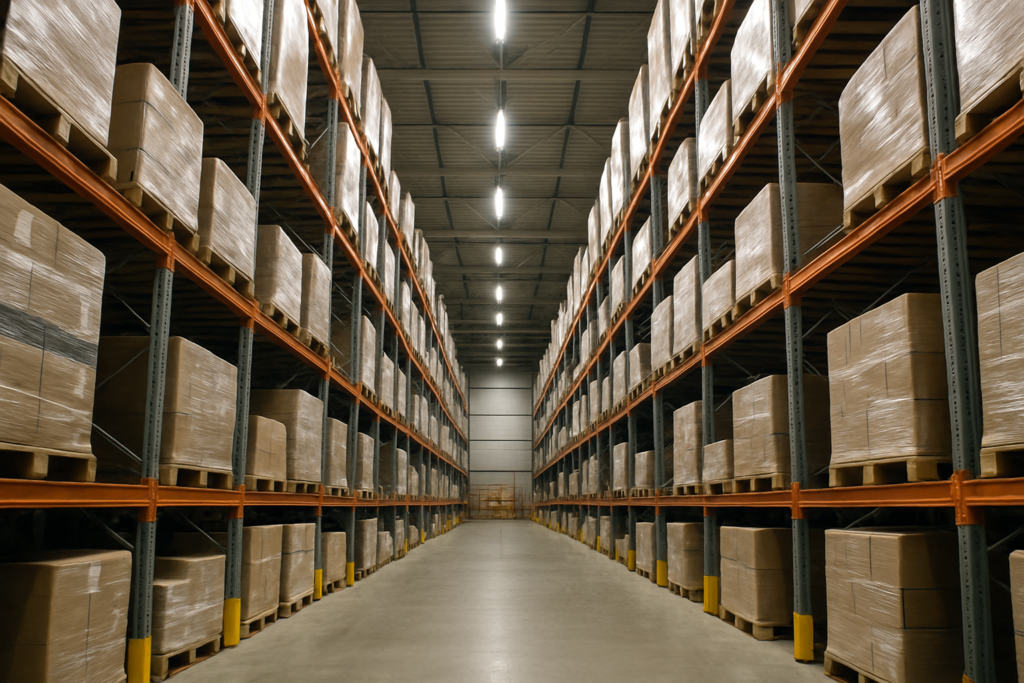
A warehouse is a facility built for one core purpose: storing goods safely until they are needed. That need might be days away or months away. Retailers, manufacturers, and distributors use warehouses to hold seasonal inventory, buffer stock, or bulk imports.
Inside a traditional warehouse, the operational rhythm is slow and deliberate. Pallets arrive from suppliers and staff log them into inventory. Furthermore, goods sit in racking until a larger shipment is assembled. Staff handle relatively few transactions per day compared to a fulfillment operation. The infrastructure reflects this straightforward design: wide aisles for forklifts, high ceilings for vertical storage, and minimal packing stations.
Warehouses also serve as consolidation hubs. Additionally, understanding cross docking vs traditional warehousing what businesses should know helps clarify how consolidation strategies differ. This knowledge shows which approach reduces transit time most effectively.
Before goods reach their final destination, they may pass through a warehouse. Shipments from multiple origins are combined into a single outbound load. One important variant is the bonded warehouse or Foreign Trade Zone (FTZ). In these facilities, international goods can be stored without triggering immediate U.S. customs duties. 3PL Warehouse By Best operates bonded and FTZ-approved space in the tri-state area. This gives importers in the NYC metro region a genuine cost advantage on international freight.

What a Fulfillment Center Actually Does
A fulfillment center is built for movement, not storage. Its entire layout is engineered to receive inventory and process individual customer orders quickly. Moreover, it ships orders out, often the same day they are placed. Where a warehouse might handle dozens of outbound shipments per week, a fulfillment center processes thousands per day.
The workflow inside a fulfillment center is dense and precise. Inventory arrives and staff scan it immediately. Then they slot items into pick locations optimized for speed. When an order comes in through an ecommerce platform or sales channel, staff or automated systems pick the item. They pack it, apply a label, and hand it to a carrier.
Returns are processed according to the client’s instructions. Some are restocked; others are disposed of. Accuracy is non-negotiable in this environment. Reviewing how 3pls support ecommerce order fulfillment at scale provides a detailed look at required infrastructure and integrations.
A mispick or delayed shipment damages customer trust. In addition, it triggers costly returns. Fulfillment centers invest heavily in barcode scanning, warehouse management systems (WMS), and quality control checkpoints. These tools keep error rates low. 3PL Warehouse By Best handles same-day order processing with barcode accuracy across its tri-state facilities. For ecommerce brands shipping to the dense Northeast consumer market, that proximity translates directly into faster delivery windows and lower last-mile costs.
Key Operational Differences in the Fulfillment Center vs Warehouse Comparison
The table below breaks down the structural differences between the two facility types. These factors matter most to business operators evaluating the fulfillment center vs warehouse choice.
| Factor | Warehouse | Fulfillment Center |
|---|---|---|
| Primary function | Bulk storage | Order picking and shipping |
| Order volume handled | Low to moderate (pallets out) | High (individual units out) |
| Staffing intensity | Lower | Higher (pick, pack, QC) |
| Technology needs | Basic WMS | Advanced WMS, barcode systems |
| Typical client | Manufacturers, distributors | Ecommerce brands, DTC sellers |
| Dwell time of goods | Weeks to months | Days to a week |
| Returns processing | Rarely handled | Core service |
| Value-added services | Limited | Kitting, custom packaging, inserts |
Neither facility type is inherently superior. Each one serves a different phase of the supply chain. In fact, many businesses run both simultaneously. The fulfillment center vs warehouse difference becomes clear when you map operations to business objectives.
Cost Structure: What You Are Really Paying For
Pricing for warehouse space is typically quoted per pallet per month or per square foot per year. In high-density markets like New York City and northern New Jersey, industrial lease rates rank among the highest in the country. Commercial real estate firms that monitor tri-state industrial inventory track these rates closely.
Fulfillment centers charge differently. You pay a receiving fee when inventory arrives. Additionally, you pay storage fees while goods sit in the facility. Furthermore, you pay a per-order pick-and-pack fee when items ship. Carrier costs remain separate from these facility charges.
This model means your bill scales directly with activity. As a result, it suits seasonal businesses and brands in early growth stages well. Operational leverage also differs significantly. Businesses wanting to understand that opportunity should explore freight consolidation 3pl efficiency as part of logistics planning. Efficient freight consolidation reduces inbound costs substantially before goods even reach a fulfillment center.
For businesses selecting transportation partners alongside warehouse or fulfillment setup, knowing which carriers and brokers fit your lanes is equally important. Resources like the 20 best freight brokerage companies in 2026 and how to pick the right partner anchor that part of the decision.
When to Use Each Fulfillment Center vs Warehouse Facility Type
Choose a warehouse when:
- You import or manufacture in bulk and need storage before distributing to retail locations or regional DCs.
- Your outbound shipments are full pallets or full truckloads, not individual parcels.
- You have predictable, low-frequency order patterns.
- You need bonded or FTZ storage to defer customs duties on international freight.
Choose a fulfillment center when:
- You sell directly to consumers online and need fast, accurate individual order shipping.
- Customer expectations include two-day or same-day delivery windows.
- You lack the staff or technology to handle pick-pack-ship operations in-house.
- You want returns handled and restocked without managing that process yourself.
Many businesses need both. For example, a brand might import 40-foot containers into a bonded warehouse. Then they transfer smaller quantities to a fulfillment center as orders ramp up. A 3PL that handles both functions under one roof simplifies that handoff significantly. Understanding the fulfillment center vs warehouse difference helps you make this decision strategically.
Things to Know
- The terms “warehouse” and “fulfillment center” are often used interchangeably in vendor marketing. However, their operational capabilities differ substantially.
- Fulfillment centers in metro markets like New York cost more per square foot. Therefore, they reduce last-mile shipping costs and transit times for East Coast consumers.
- Short-term and pop-up storage options exist for brands needing temporary space during peak seasons. These options avoid long-term lease commitments.
- FTZ and bonded warehouse status must be officially designated by U.S. Customs and Border Protection. Not every facility qualifies for this designation.
- Your WMS integration capability matters significantly. A fulfillment center that cannot connect to your Shopify, Amazon, or ERP platform will create manual work and errors.
Start With the Right Facility for Your Operation
If your business is growing and your current storage or shipping setup is slowing you down, the right facility structure can make a measurable difference. Get your free quote today from 3PL Warehouse By Best. We will help you find which combination of warehousing and fulfillment services fits your volume, geography, and timeline. Tell us your current order volume and storage needs. We will match you with the right solution across our tri-state network.
Frequently Asked Questions
Q: Can one facility function as both a warehouse and a fulfillment center?
A: Yes, many 3PL facilities offer both bulk storage and order fulfillment under one roof. Some providers, including 3PL Warehouse By Best, receive pallet shipments and store them. Then they pick-and-pack individual orders as they come in. This hybrid model works well for brands in a growth phase that need flexible capacity.
Q: Is a fulfillment center more expensive than a warehouse?
A: It depends on your operation. Fulfillment centers charge for services, while warehouses primarily charge for space. If you ship high volumes of individual orders, the per-order fees at a fulfillment center typically cost less than hiring in-house staff. Additionally, leasing your own space adds further expense. Warehouses are generally cheaper if you only need storage and bulk shipping.
Q: How does location affect which facility type I should choose?
A: Location affects both your shipping costs and delivery speed, especially for ecommerce businesses. A fulfillment center near your largest customer base shortens transit time. Moreover, it reduces carrier zone charges. For businesses selling heavily on the East Coast, a tri-state facility covering New York, New Jersey, and Connecticut provides strong geographic coverage.
Q: What is a bonded warehouse, and do I need one?
A: A bonded warehouse is a federally authorized facility. Imported goods can be stored there before U.S. customs duties are assessed. If you import goods internationally and want to defer duty payments until the goods are sold or distributed, a bonded or FTZ warehouse is worth considering. Not all 3PLs hold this designation. Therefore, confirm this capability before signing a contract.
Q: How do I know if I have outgrown my current warehouse setup?
A: Signs include missed ship dates, high error rates on outbound orders, or inventory that you cannot locate quickly. If your team spends more time firefighting logistics problems than managing the business, that signals a need to evaluate a professional 3PL arrangement. A facility with real-time inventory tracking and barcode accuracy can resolve most of those pain points quickly.
The Bottom Line on the Fulfillment Center vs Warehouse Difference
The fulfillment center vs warehouse difference comes down to function: one stores, the other ships. Your business likely needs elements of both. In addition, the smartest logistics strategies treat them as complementary rather than competing options. As your order volume grows or your supply chain becomes more complex, partnering with a 3PL that handles both functions becomes increasingly valuable.
3PL Warehouse By Best handles both across the NYC tri-state region. This removes the burden of managing multiple vendors and facilities on your own. Review your current storage and shipping costs honestly. Map them against your customer delivery expectations. Then make the facility decision based on where your operation is headed, not just where it is today.