
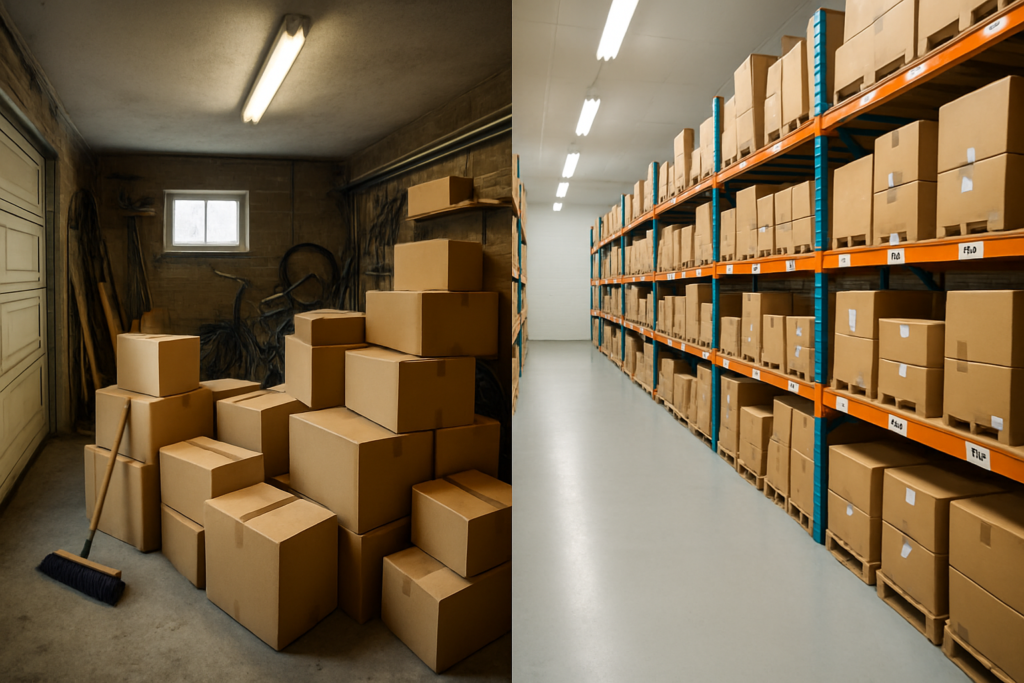
Running a small business means wearing a lot of hats. When order volume climbs, fulfillment can quietly become the bottleneck that caps your growth. Therefore, outsourcing order fulfillment lets small businesses hand off warehousing, picking, packing, and shipping to specialists so they can focus on sales, product development, and customer relationships.
Table of Contents
- Why More Small Businesses Are Outsourcing Fulfillment
- What a 3PL Actually Does for Your Outsource Order Fulfillment
- How to Know When You’re Ready to Outsource Order Fulfillment
- Costs, Contracts, and What to Watch For
- Things to Know
- Take the Next Step for Your Outsource Order Fulfillment Business
- Frequently Asked Questions
Key Takeaways
- Retailers outsourcing to 3PLs see a 29% improvement in on-time delivery and a 28% reduction in cost per order, according to Forrester research.
- A 2024 Deloitte study found small businesses using 3PLs reduced logistics costs by 28% on average.
- 95% of shipper respondents in the 2024 Third-Party Logistics Study (CSCMP) agreed their 3PL relationships were successful.
- The right time to outsource is typically when fulfillment consumes more than 20 hours per week or order errors begin rising.
- Not all 3PLs are equal: location, technology integrations, and minimum order thresholds vary significantly.
- Transparency on pricing structures, particularly for returns handling and storage overages, is essential before signing any contract.
Why More Small Businesses Are Outsourcing Fulfillment
The numbers tell a clear story. According to Clutch (2024), 37% of small businesses with fewer than 500 employees already outsource at least one business function. Within e-commerce specifically, that figure jumps to 49%. Additionally, Forrester research shows that retailers outsourcing to 3PLs achieve a 29% improvement in on-time delivery. They also see a 28% reduction in cost per order.
A 2024 Deloitte study reinforced this finding. Small businesses using 3PLs reduced overall logistics costs by 28% on average. Beyond the cost angle, the fulfillment market itself is expanding fast. The global e-commerce fulfillment services market was valued at $114.80 billion in 2024. It is projected to reach $279.70 billion by 2033, at a CAGR of 10.4% (Straits Research).
The DTC outsourced fulfillment segment alone is forecast to grow significantly. It will expand from $28.12 billion in 2025 to $75.02 billion by 2035 at a 9.33% CAGR (Market Research Future). For a deeper overview of how the industry is structured, understanding third party logistics explained covers the operational model in detail. This helps small businesses that delay outsourcing recognize they risk falling behind competitors who are already benefiting from these efficiencies.

What a 3PL Actually Does for Your Outsource Order Fulfillment
A third-party logistics provider is not just a storage unit with a loading dock. When you outsource order fulfillment as a small business, you gain access to a full operational stack. Building this in-house would cost significantly more.
Here is what a capable 3PL typically handles:
- Receiving and inventory management: Inbound shipments are logged, inspected, and placed into a tracked system. Real-time inventory visibility means you know stock levels without counting shelves yourself.
- Pick, pack, and ship: When an order comes in, warehouse staff pull the right items and pack them to spec. They ship through negotiated carrier rates that most small businesses cannot access on their own.
- Returns handling: Reverse logistics is one of the most time-consuming parts of e-commerce. A 3PL processes returns, restocks sellable items, and flags damaged goods.
- Cross-docking and short-term storage: For seasonal spikes or promotional inventory, on-demand and pop-up storage options prevent you from committing to long-term leases you do not need.
- Bonded and FTZ warehousing: If you import international freight, a Free Trade Zone facility defers customs duties until goods enter commerce. This improves cash flow meaningfully.
Understanding warehouse management system features helps you evaluate whether a prospective 3PL’s technology stack will actually integrate with your storefront and order management tools.
At 3PL Warehouse By Best, which serves the tri-state area spanning New York, New Jersey, and Connecticut, same-day order processing and barcode accuracy are standard operating procedures. These are not premium add-ons.

How to Know When You’re Ready to Outsource Order Fulfillment
Timing matters. Outsourcing too early can mean paying minimums you cannot justify. Waiting too long means fulfillment errors and delays will cost you customers before you make the switch.
Practical signals that you are ready include:
- Fulfillment tasks consume more than 15 to 20 hours per week of your or your team’s time.
- Order error rates are climbing because of manual picking processes.
- You are running out of storage space and facing a decision about signing a lease.
- Shipping costs per order are rising because you lack carrier volume discounts.
- Seasonal peaks cause delays that generate customer complaints and refund requests.
The 2024 Third-Party Logistics Study published by the Council of Supply Chain Management Professionals (CSCMP) found compelling evidence. 95% of shipper respondents and 99% of 3PL respondents agreed their partnerships were successful. Additionally, 89% of shippers reported that 3PLs improved service levels. Moreover, 80% reported measurable cost reductions.
When evaluating providers, following a structured process helps significantly. Guidance from how to choose a 3pl provider outlines the key criteria to assess before signing a contract. This ensures the data strongly supports outsourcing as less of a risk and more of an operational upgrade for businesses past the early startup stage.
Costs, Contracts, and What to Watch For
Pricing in the 3PL space is not always straightforward. Most providers charge a combination of receiving fees, monthly storage fees (often per pallet or cubic foot), pick-and-pack fees per order, and outbound shipping costs. Additionally, some charge account setup fees or technology integration fees.
| Fee Type | Typical Structure | Watch For |
|---|---|---|
| Receiving | Per pallet or per hour | Minimum charges on small inbound shipments |
| Storage | Per pallet/bin/cubic foot monthly | Overage charges during peak season |
| Pick and Pack | Per order + per item | Additional fees for kitting or inserts |
| Shipping | Carrier rate (negotiated by 3PL) | Fuel surcharges and residential delivery fees |
| Returns Handling | Per unit returned | Inspection and restock fees vary widely |
Contracts vary significantly. Some 3PLs require 12-month minimums. Others offer month-to-month flexibility, which is better suited to small businesses with fluctuating volume. Ask prospective providers about their minimum order commitments. Clarify what happens if you want to exit early. Understand how they handle inventory discrepancies.
Compliance is another practical concern. Reviewing a warehouse safety checklist osha gives you a useful framework. You can evaluate whether any warehouse handling consumer goods meets safety standards. You can also assess whether a potential partner maintains a properly run facility.
Things to Know
- Not every 3PL is built for small business volume. Some providers have minimum order thresholds that make them economically impractical if you ship fewer than 200 orders per month.
- Location matters for speed and cost. A fulfillment center near major population hubs, like the NYC tri-state corridor, can significantly reduce last-mile delivery times for East Coast customers.
- Technology integration is non-negotiable. If a 3PL cannot connect directly to your Shopify, WooCommerce, or Amazon Seller account, you will create manual work rather than eliminate it.
- Returns are often where hidden costs live. Clarify the full returns handling process and pricing before signing.
- Real-time inventory visibility is a key differentiator between 3PLs. Delayed reporting leads to stockouts and overselling.
Take the Next Step for Your Outsource Order Fulfillment Business
If fulfillment is eating into your time, increasing your error rate, or limiting how fast you can grow, the case for outsourcing is straightforward. Request a free fulfillment estimate from 3PL Warehouse By Best and get a clear picture of what outsourced logistics would cost and save for your specific operation. Reach out today and receive a tailored quote based on your actual order volume and storage needs.
Frequently Asked Questions
Q: How much does it cost to outsource order fulfillment as a small business?
Costs vary by provider, order volume, and service scope. Most small businesses pay a combination of storage, pick-and-pack, and shipping fees.
Entry-level 3PLs can accommodate smaller merchants starting around $500 to $1,000 per month in combined fees. However, a 2024 Deloitte study found that small businesses using 3PLs reduced logistics costs by 28% on average compared to in-house fulfillment. This suggests the upfront fees are often offset by savings elsewhere.
Q: What is the minimum order volume needed to outsource fulfillment?
Many 3PLs work with businesses shipping as few as 100 to 200 orders per month, though minimums vary by provider. Some enterprise-focused providers require much higher volumes.
If you are below 100 orders per month, it is worth comparing fulfillment costs carefully against in-house options before committing.
Q: How long does it take to set up with a 3PL?
Onboarding with a 3PL typically takes one to four weeks, depending on integration complexity and inbound inventory volume. The process includes setting up a warehouse management system integration, shipping your initial inventory, and configuring order routing rules.
Providers with dedicated onboarding support can accelerate this timeline significantly.
Q: Will outsourcing fulfillment affect my customer experience?
When done well, outsourcing improves customer experience through faster shipping, fewer errors, and more consistent packaging. Retailers outsourcing to 3PLs achieve a 29% improvement in on-time delivery according to Forrester research.
The key is choosing a provider with strong quality control processes and real-time tracking visibility.
Q: Can I outsource fulfillment if I sell on multiple sales channels?
Yes. Most established 3PLs support multi-channel fulfillment across platforms like Shopify, Amazon, eBay, and direct-to-consumer storefronts. Make sure the provider’s warehouse management system can pull orders from all your active channels automatically.
Manual order entry across multiple platforms defeats the purpose of outsourcing.
The Bottom Line on Outsource Order Fulfillment Small Business
For small businesses past the early startup phase, outsourcing fulfillment is one of the highest-leverage operational decisions available. The cost savings, delivery improvements, and time reclaimed are well-documented across multiple industry studies. Therefore, the main risk is choosing the wrong partner.
This is why due diligence on pricing, technology, and contract terms is essential before committing. Start by requesting a detailed quote from a provider that serves your geography. Choose one that understands your order volume. Select a partner that offers transparent pricing with no surprise fees.