
What’s in This Guide
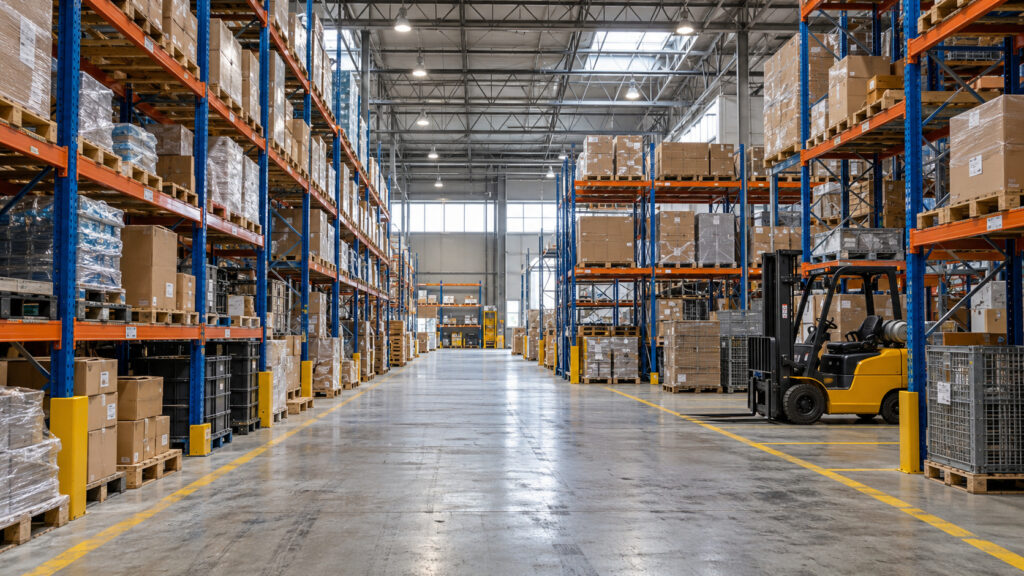
Multi-node fulfillment stores inventory in two or more fulfillment locations and routes each order to the node best positioned to serve it. Instead of asking one warehouse to cover every destination, a business uses distributed inventory to reduce shipping distance, improve delivery options, and add flexibility when demand shifts.
For companies selling into the Northeast, a 3PL warehouse in New York can serve as one node inside a broader regional fulfillment network. The right time to add a node depends on order density, customer geography, inventory depth, carrier costs, service expectations, and system capability.
The U.S. Census Bureau reported that e-commerce represented 17.1% of total U.S. retail sales in the second quarter of 2026. As online order volume expands, warehouse logistics decisions can have a larger effect on transportation spend, delivery speed, and inventory availability.
Quick Facts
- Multi-node fulfillment places stock closer to multiple customer clusters.
- A New York node can support Northeast demand while other facilities cover different regions.
- Distributed inventory may shorten shipping distance, but it adds forecasting, replenishment, and systems complexity.
- Routing should consider inventory availability, service level, order splitting, and cost, not proximity alone.
- Add a node only when expected service and transportation gains outweigh added inventory and operating costs.
What Does Multi-Node Fulfillment Change?
A single warehouse keeps inventory, labor, and fulfillment activity in one location. This setup can work well when demand is relatively concentrated and shipping expectations are manageable.
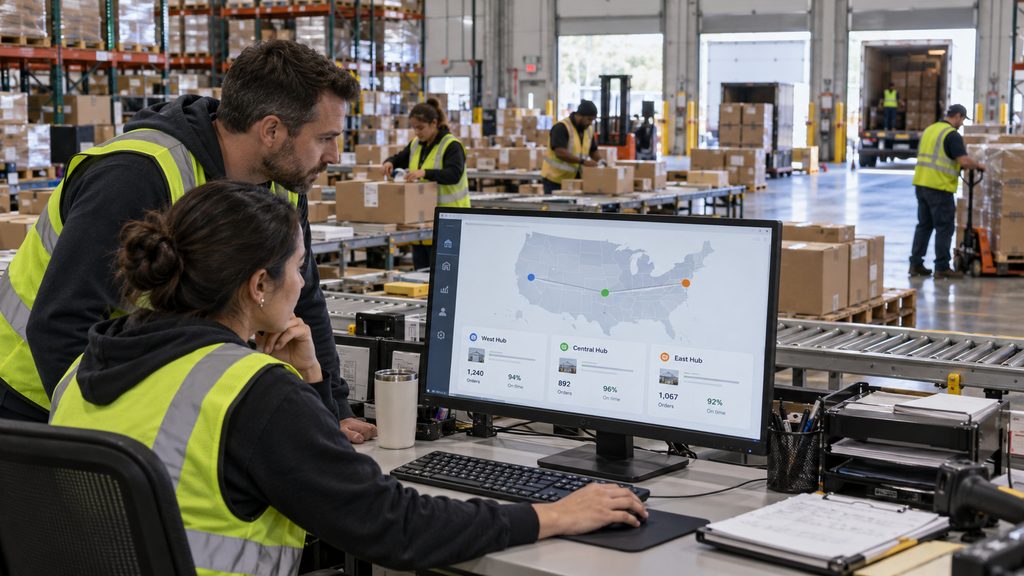
A multi-node network spreads inventory across multiple facilities and uses routing rules to determine where orders should ship from. Those decisions may consider factors such as product availability, customer location, delivery speed, and fulfillment priorities.
For warehouse logistics teams, the main consideration is whether adding more fulfillment locations improves service and efficiency enough to justify the added coordination.
When Should You Add Another Fulfillment Node?
Scenario | Single Node May Still Work | Add a Node When | Main Tradeoff |
Orders cluster in one region | Most customers remain near the current facility | A second customer cluster becomes consistently large | More inventory across locations |
Transit times are acceptable | Current service levels meet expectations | Distance regularly blocks target delivery windows | Faster reach versus added fixed costs |
Parcel spend is rising | Long-distance costs remain manageable | Distant shipments drive a material share of spend | Transportation savings versus node expense |
Inventory is shallow | Many SKUs have low unit depth | Core SKUs can be duplicated safely | Availability versus stock fragmentation |
Systems are simple | Basic routing is sufficient | Orders need automated location selection | Better routing versus integration complexity |
How to Evaluate a New York Fulfillment Node
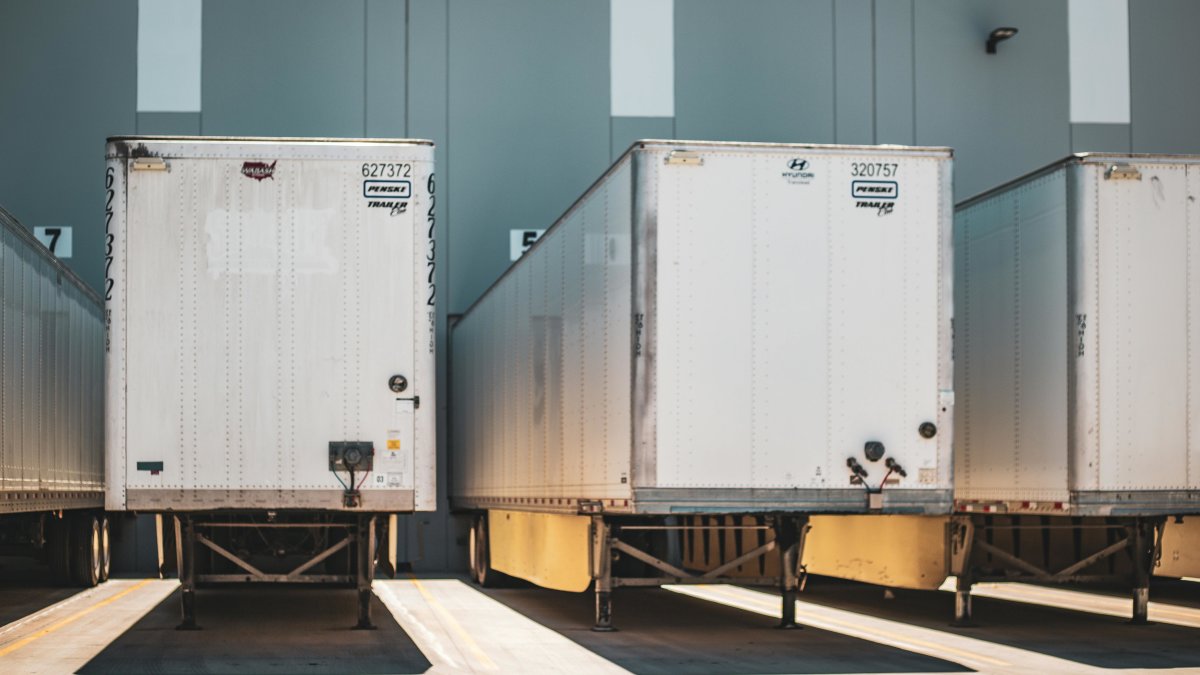
A New York fulfillment node should be evaluated against demand patterns, shipping performance, inventory strategy, routing logic, and replenishment needs before inventory is distributed across locations.
Map Order Demand by Destination
Review several months of shipments and identify recurring customer clusters. A new node should support a durable demand pattern rather than a temporary spike.
Model Shipping Distance and Service Levels
Compare the current fulfillment origin with a New York option for Northeast orders. Evaluate transit time, carrier service, and total parcel cost.
Segment Inventory by Velocity
Fast-moving, predictable SKUs are generally easier to distribute across multiple locations than slow or volatile items. Avoid duplicating the entire catalog without a demand-based reason.
Define Order-Routing Rules
Decide how the network will handle stockouts, split shipments, priority orders, backorders, and situations where more than one location can fulfill the order. Routing should consider total service cost, not geography alone.
Plan Replenishment and Inventory Visibility
Each node needs reliable inventory data and practical replenishment thresholds. Limited visibility can lead to transfers, cancellations, or unnecessary split shipments.
What Cost Tradeoffs Come With Distributed Inventory?
Distributed inventory can reduce outbound distance, but it shifts cost elsewhere. Businesses may carry more safety stock, replenish more locations, integrate additional systems, and manage more operating relationships.
A useful cost model includes storage, receiving, pick-and-pack, parcel transportation, inventory carrying cost, transfers, technology, and exception handling. A regional fulfillment network is stronger when service improvements and transportation savings offset those added expenses.
A provider of 3PL warehouses in New York can be relevant when a company needs Northeast capacity without opening and staffing its own facility. Its value depends on how well the node connects with existing inventory, order management, and transportation processes.
Frequently Asked Questions
Can a New York fulfillment node be used for seasonal demand?
Yes. Many businesses scale up regional fulfillment capacity during peak seasons to manage order spikes in high-density areas without committing to long-term space everywhere.
Can returns be processed through a New York fulfillment node?
Yes. Processing returns close to major population centers reduces return shipping transit times and allows inventory to be inspected and restocked faster.
Should B2B and e-commerce orders use the same fulfillment node?
They can, provided the facility handles both parcel routing for e-commerce and pallet or freight preparation for B2B channels effectively.
What information should be shared with a New York 3PL before onboarding?
Provide historical order volumes, regional customer distribution, SKU velocity metrics, packaging requirements, and system integration specs.
Can a company test a New York fulfillment node before expanding its network?
Yes. Starting with top-selling SKUs or a limited order pool allows companies to measure actual cost savings and performance before fully integrating the node.
Build the Network Around Real Demand
Multi-node fulfillment is useful when customer geography, shipping economics, and service expectations show that one location is creating avoidable friction.
3PL Warehouse By Best can support businesses evaluating a New York fulfillment node within a broader warehouse logistics strategy. The goal is to match capacity to actual order patterns, keep inventory visible, and add nodes where they create measurable value.
Contact 3PL Warehouse By Best to discuss your New York fulfillment strategy.
Related Posts