

Warehouse automation technology trends are accelerating faster than most supply chain teams expected. Robotics adoption, AI-powered software, and growing pressure to cut labor costs are driving this shift. Understanding which technologies are gaining traction helps operations teams invest wisely rather than react to industry noise.
Table of Contents
- The Scale of the Shift
- Robotics: From Pilot Projects to Floor-Level Deployment
- Software Infrastructure: Warehouse Automation Technology Trends in WMS and AI
- Where Automation Adoption Actually Stands
- Safety, Compliance, and Human Factors
- Things to Know
Key Takeaways
- The global warehouse automation market is projected to reach $119.86 billion by 2034, growing at a 16.13% CAGR (Fortune Business Insights, 2026).
- Only 25% of warehouses worldwide have implemented any form of automation as of 2024, meaning most facilities still have significant room to modernize.
- Robotics integration reduces manufacturing and labor costs by 25 to 30%, verified across multiple 2024 to 2026 industry sources.
- Mobile and wireless data collection technologies lead adoption, used by 77% of companies surveyed in 2025 (Peerless Research Group).
- Automation does not eliminate the need for skilled 3PL partners; it changes what those partners must offer in technology infrastructure and real-time visibility.
- Businesses entering the automation conversation should evaluate fulfillment partners on tech capabilities alongside price.
The Scale of the Shift
The numbers behind warehouse automation deserve attention from operations leaders regardless of their current tech stack. According to Fortune Business Insights (2026), the global warehouse automation market was valued at $31.21 billion in 2025. It is projected to reach $119.86 billion by 2034, representing a compound annual growth rate of 16.13%.
Research and Markets (February 2026) places the 2024 market at $22.1 billion. They project $57.8 billion by 2030 at a 17.4% CAGR. These figures reflect real capital flowing into real infrastructure.
Retailers, e-commerce platforms, and third-party logistics providers across the U.S. are committing budget to automation for solid reasons. Labor shortages, consumer delivery expectations, and SKU complexity have made manual-only operations structurally expensive. Therefore, capital investment in warehouse automation technology trends has become a strategic necessity rather than a trend.
For businesses evaluating logistics partners, understanding third party logistics explained clarifies how 3PLs integrate these technologies into fulfillment. You can then determine whether a given provider keeps pace with the market.
Robotics: From Pilot Projects to Floor-Level Deployment
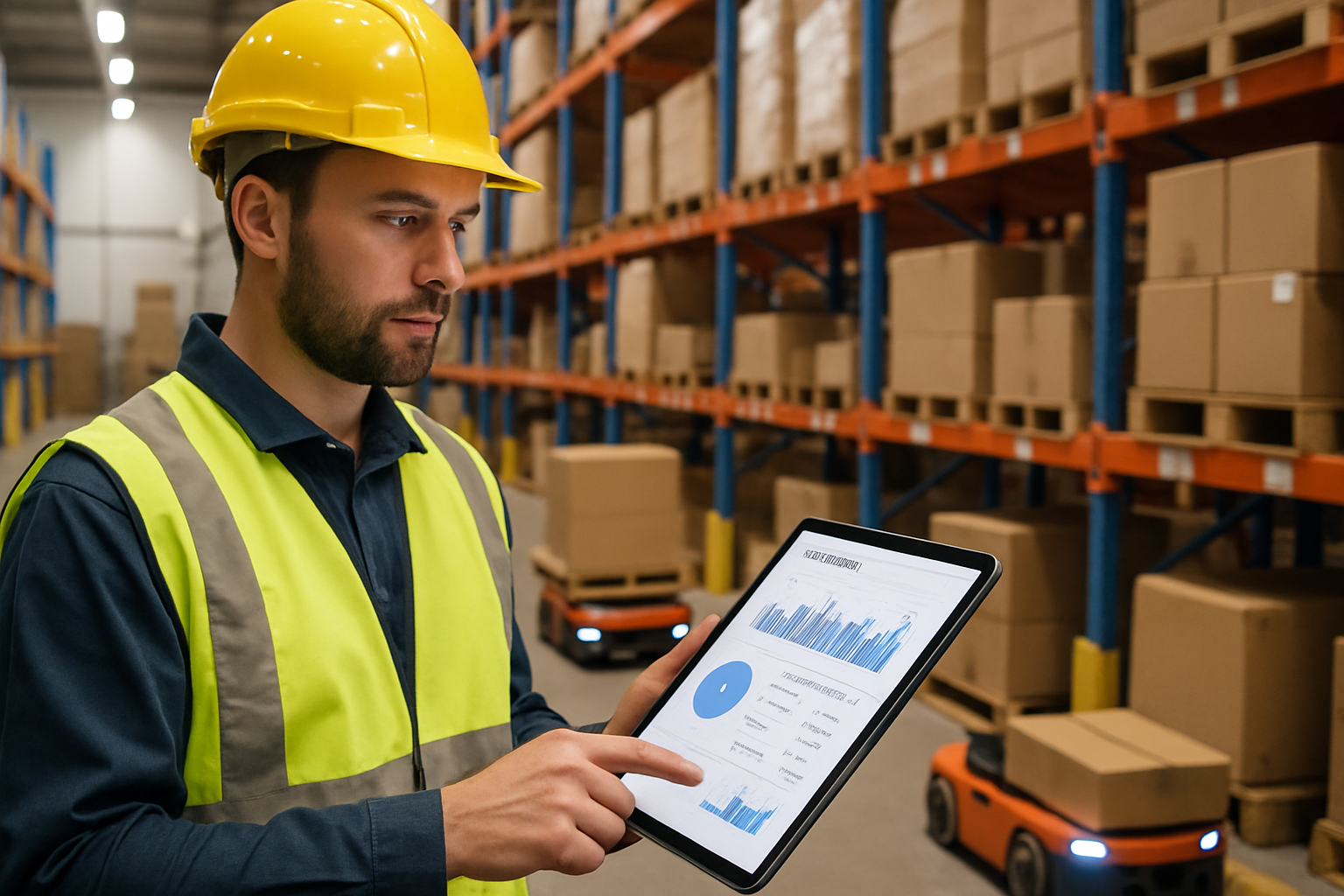
The shift from pilot programs to large-scale robotics deployment defines warehouse automation technology trends in this cycle. Over 450,000 logistics robots were sold worldwide in 2025. In contrast, only 75,000 were sold in 2019—a 500% increase over six years.
By the end of 2026, approximately 4.69 million commercial warehouse robots are expected to be installed. These robots will operate across more than 50,000 warehouses worldwide.
Breaking down robotics by category reveals adoption patterns. According to the 2025 Peerless Research Group Automation Survey:
- Shuttle systems and mobile robotic storage: 41% currently use them; 59% plan implementation within two years
- Palletizing robots: 33% current usage
- Autonomous guided vehicles (AGVs): 31% current usage
- Pocket sortation systems: 32% current usage
- Automated packaging: 31% current usage
- Collaborative robotics (cobots): 26% current usage
The labor cost case is compelling. Moreover, robotics integration drives a 25 to 30% reduction in manufacturing and labor costs. This reduction, verified across multiple 2024 to 2026 industry sources, is the difference between sustainable and unsustainable unit economics for high-volume fulfillment environments.
Businesses evaluating whether to build, partner, or outsource automation capabilities should weigh their volume thresholds carefully. In many cases, partnering with a tech-enabled 3PL proves far more cost-effective than purchasing robotics systems outright. Understanding how to choose a 3pl provider becomes a practical first step before committing to any infrastructure decision.
Software Infrastructure: Warehouse Automation Technology Trends in WMS and AI
Hardware robotics receives the headlines. However, software is the connective tissue that makes automation actually work. Warehouse management systems have evolved from simple inventory ledgers into real-time orchestration platforms. These platforms coordinate robots, staff, and customer-facing data simultaneously.
A modern WMS manages slotting optimization, labor management, carrier selection, and returns processing. Additionally, it handles exception alerting while understanding current warehouse management system features. This knowledge is essential before selecting any fulfillment partner or evaluating an in-house system build.
AI accelerates WMS capabilities in specific areas. These include demand forecasting, dynamic slotting, pick-path optimization, and anomaly detection in inventory data. Importantly, these are not hypothetical applications. Large 3PLs and retailers run these models in production environments today.
The 2025 Peerless Research Group survey found that 77% of companies now use mobile and wireless technologies for data collection. This is up from 58% in 2024. Barcode scanner usage reached 76%, compared to 66% previously. Pick-to-light and put-to-light systems are in use at 46% of surveyed facilities.
Furthermore, fully automated capabilities show these adoption rates: 15% use automated reporting, 10% use automated labeling, and 9% use automated conveyance. Packaging and picking lag significantly at 6% and 4% respectively. These figures confirm that partial automation is the norm, not full lights-out warehousing.

Where Automation Adoption Actually Stands
Despite significant investment activity, deployment remains uneven across the industry. Only 25% of warehouses worldwide have implemented any form of automation as of 2024. Additionally, just 10% use advanced automation technologies (Meteor Space, 2024, as cited in Must-Know Warehouse Statistics).
This gap between market growth projections and real-world adoption reflects an important truth: automation is expanding rapidly, but most warehouse operations remain early in the transition. The barriers include cost, complexity, and organizational change management challenges.
For U.S.-based businesses, particularly small and mid-size brands operating in competitive markets like the tri-state area, this situation creates both risk and opportunity. Facilities that automate thoughtfully gain measurable advantages. In contrast, those that delay risk falling behind on throughput speed, accuracy rates, and fulfillment cost structure.
3PL Warehouse By Best serves the NYC metro area including New Jersey and Connecticut. Our real-time inventory tracking reflects the technology infrastructure clients increasingly expect. We provide barcode-driven order fulfillment and same-day processing capabilities that align with warehouse automation technology trends.
Safety, Compliance, and Human Factors
Automation does not remove safety obligations. Moreover, following a thorough warehouse safety checklist osha is essential when deploying any new system alongside a human workforce.
Human workers remain central to warehouse operations even in highly automated facilities. Cobots are designed to work alongside people rather than replace them entirely. Training requirements increase when automation is introduced. Additionally, incident prevention planning must account for new machine-human interaction points.
Things to Know
- Automation adoption is highly uneven: only 10% of warehouses globally use advanced automation as of 2024. Therefore, competitive advantage remains available to early movers.
- Full lights-out warehousing remains rare; most facilities operate in hybrid models where humans and machines share the floor.
- AI-powered WMS tools improve demand forecasting and slotting, but implementation quality varies significantly between providers.
- Robotics ROI depends heavily on order volume. Facilities processing fewer than a few hundred orders per day may not hit payback thresholds for full robotic systems.
- For businesses without capital to automate in-house, partnering with a tech-enabled 3PL provides access to automation benefits without ownership costs.
Take Your Next Step on Warehouse Automation Technology Trends
If your current fulfillment setup is not keeping pace with logistics technology advancement, this is the right moment to reassess. Request a free estimate from 3PL Warehouse By Best and discover how our tech-enabled warehousing and fulfillment services support your growth across the tri-state area. Tell us your current volume, SKU profile, and service expectations. We will show you exactly what our infrastructure can deliver.
Frequently Asked Questions
Q: What is driving the growth of warehouse automation technology in 2026?
A: The primary drivers are labor cost pressure, e-commerce volume growth, and rapid improvements in robotics and AI software.
The global warehouse automation market is on track toward $119.86 billion by 2034 (Fortune Business Insights, 2026). This growth is fueled by demand for faster fulfillment and more accurate inventory management. Additionally, persistent labor shortages across U.S. distribution hubs have accelerated investment timelines considerably.
Q: What percentage of warehouses are currently automated?
A: Only 25% of warehouses worldwide have implemented any form of automation as of 2024, with just 10% using advanced systems (Meteor Space, 2024).
This means the majority of global warehouse capacity still relies primarily on manual operations. The gap between market projections and real-world adoption reflects cost, complexity, and change management barriers. Furthermore, many facilities have yet to overcome these obstacles.
Q: Which robotics technologies are most commonly used in warehouses right now?
A: Shuttle systems, palletizing robots, AGVs, and collaborative robotics are the most widely deployed categories as of 2025.
According to the 2025 Peerless Research Group Automation Survey, palletizing robots are used by 33% of surveyed companies. AGVs are used by 31%, and collaborative robotics by 26%. Shuttle and mobile robotic storage systems lead planned adoption, with 59% of facilities planning implementation within two years.
Q: Can small and mid-size businesses benefit from warehouse automation?
A: Yes, but the most practical path for smaller businesses is often partnering with a tech-enabled 3PL rather than purchasing automation systems outright.
The capital cost of full robotics deployment puts direct ownership out of reach for many SMBs. However, a qualified 3PL with real-time WMS capabilities, barcode accuracy, and same-day processing delivers many of the same throughput benefits. This approach avoids requiring the capital investment.
Q: How does automation affect warehouse safety compliance?
A: Automation introduces new safety requirements around human-robot interaction zones, machine guarding, and updated training protocols.
OSHA guidelines apply to automated environments just as they do to manual ones. In some respects, they apply more rigorously given the speed and scale of robotic systems. Therefore, any facility integrating new automation should conduct a full safety audit. You should also update your standard operating procedures accordingly.
The Bottom Line on Warehouse Automation Technology Trends
Warehouse automation technology trends point clearly in one direction: faster adoption, broader robotics deployment, and deeper AI integration across fulfillment operations. The businesses that act strategically now—whether through direct investment or through smarter 3PL partnerships—will be better positioned to compete on speed, accuracy, and cost as the market continues to shift.
Your next step is straightforward. Evaluate your current fulfillment infrastructure against where the industry is heading. Then connect with a provider that already operates at the technology standard the market now demands.