
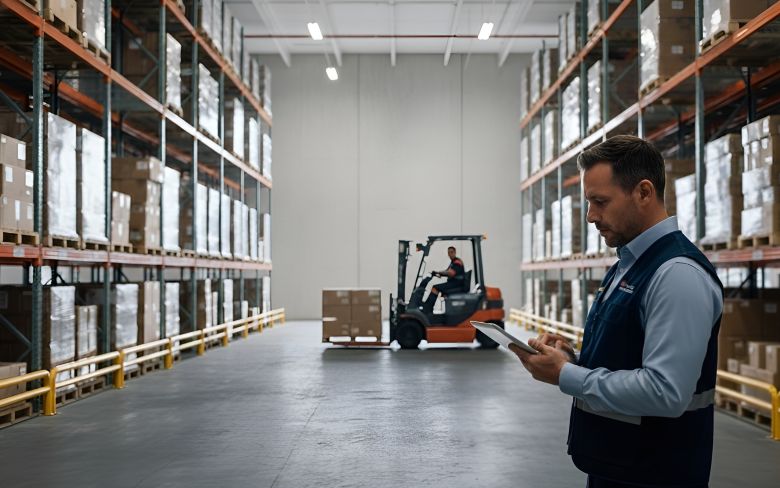
As supply chains get faster and more complex, 3PL providers have become essential across industries and a key force in the growing global logistics sector. For small businesses, the right 3PL partner supports scaling while keeping costs and operations under control.
Here are the key considerations that matter most when selecting a 3PL partner.
Key Takeaways✔ The best 3PL companies balance cost, scalability, and technology to support both current demand and future growth. ✔ Warehousing services should match product type, order volume, and fulfillment complexity. ✔ Strategic warehouse location directly affects shipping speed and total fulfillment cost. ✔ Transparent pricing and flexible contracts reduce long-term operational risk. ✔ A structured evaluation process leads to better long-term 3PL partnerships |
Table of Contents
What Is a 3PL, and How Do Warehousing Services Work?
A third-party logistics provider manages logistics operations on behalf of a business. These companies handle inventory storage, order fulfillment, and shipping so brands can focus on product development and customer acquisition. Most 3PL providers operate shared warehouse facilities and use technology platforms to manage orders across multiple clients.
For small businesses, outsourcing logistics through a 3PL for small business reduces capital investment and operational risk. Instead of leasing space or hiring warehouse staff, companies pay for the capacity and services they use.
Key Warehousing Services Offered by 3PL Companies
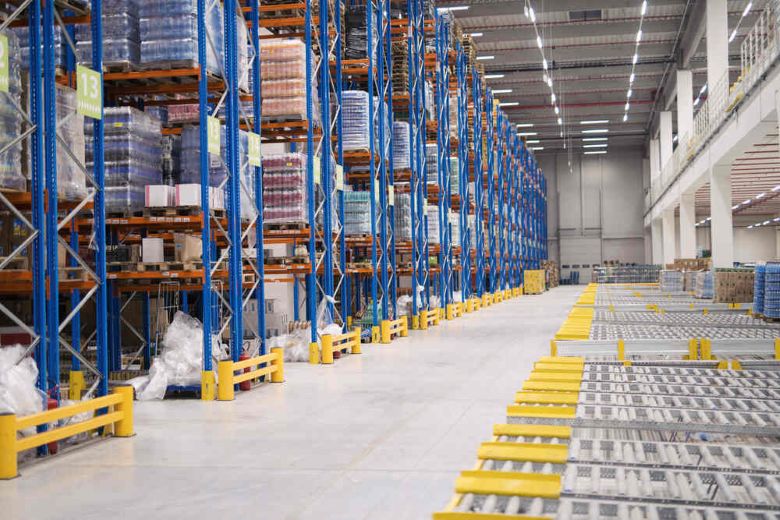
Modern warehousing services go beyond storage. Most providers offer:
- Inventory receiving and storage.
- Pick, pack, and ship fulfillment.
- Returns processing and restocking.
- Value-added services such as kitting, labeling, and FBA prep
Why Small Businesses Use 3PL Providers
Small businesses turn to 3PL providers to simplify fulfillment, reduce operational strain, and keep up with rising customer expectations. As order volumes grow and delivery speed becomes more important, outsourcing logistics often becomes more practical than managing warehousing and shipping in-house.
Lower Operational Costs
Running your own warehouse requires long-term leases, labor, equipment, and systems. A 3PL spreads those costs across multiple clients, allowing small businesses to pay only for the space and services they use.
Faster and More Reliable Shipping
3PL providers operate established fulfillment workflows and shipping relationships. This often results in quicker order processing, fewer errors, and more consistent delivery times for customers.
Easier Scaling During Growth
Order volume rarely grows in a straight line. A 3PL makes it easier to handle seasonal spikes, promotions, or sudden growth without adding temporary labor or expanding warehouse space. It also gives retail businesses flexibility to develop new transportation options, enhance logistics capabilities, and expand regional presence as demand shifts.
Focus on Core Business Activities
By outsourcing logistics, small businesses can spend more time on product development, marketing, and customer experience instead of managing inventory and shipping operations.
Access to Fulfillment Expertise
3PL teams handle fulfillment every day. Their experience with packaging, carrier selection, and returns can help small businesses avoid costly mistakes and improve overall efficiency.
When a 3PL Makes Sense (and When It Doesn’t)
3PL logistics providers are not the right solution for every business at every stage. Understanding when to outsource fulfillment helps small businesses control costs while avoiding operational strain.
When Using a 3PL Makes Sense
- Order volume is growing or fluctuates seasonally.
- Shipping and fulfillment are taking too much time away from core business tasks.
- Delivery speed or accuracy affects customer satisfaction.
- Storage space or labor capacity is becoming a constraint.
- You need access to fulfillment systems, carrier rates, or logistics expertise
When a 3PL May Not Be Necessary
- Order volume is low and predictable.
- Fulfillment can be handled efficiently in-house without added labor or space.
- Products require highly specialized handling not supported by most providers.
- The cost of outsourcing exceeds the operational benefit at your current stage.
5 Key Factors to Consider When Selecting a 3PL Company
Scalability and Flexibility
Order volume changes, so a 3PL should handle peaks and growth without restrictive minimums. Flexibility also means reasonable terms, fast onboarding, and adaptable processes.
Technology Integration and Visibility
Systems should sync with sales channels to keep orders and inventory accurate. Real-time visibility into stock, status, and tracking should be standard.
Strategic Warehouse Locations
Warehouse location drives shipping speed and cost. For East Coast demand, New York-area fulfillment can improve transit times and rates.
Cost Structure and Pricing Transparency
Know every fee that impacts monthly spend, from storage to returns. Compare total cost, not just base rates.
Industry Specialization and Service Fit
Product needs vary, so experience in the right category matters. Ensure required services are available, such as kitting, FBA preparation, or custom packaging.
How to Choose the Best 3PL for Your Small Business (Step-by-Step)

Step 1: Assess Your Fulfillment Needs
The evaluation process starts with internal clarity. Businesses should document current order volume, average order size, product dimensions, and growth projections. Identifying required services, such as cold storage or custom packaging, helps narrow suitable 3PL providers early.
Step 2: Research and Shortlist 3PL Companies
Research should focus on operational fit rather than brand recognition. Regional providers often outperform national networks for small businesses due to lower minimums and personalized service. Businesses seeking the best 3PL for ecommerce should prioritize providers with proven integrations and fulfillment workflows designed for direct-to-consumer operations.
Step 3: Request and Compare Proposals (RFPs)
Requests for proposal responses should include detailed pricing, service level agreements, and onboarding timelines. Comparing proposals across multiple 3PL companies highlights cost differences and operational trade-offs that are not visible on marketing pages.
Step 4: Evaluate Technology and Operations
Technology evaluation should include demonstrations of inventory dashboards, order management systems, and reporting tools. Providers that rely on manual processes increase the risk of errors. Strong systems provide real-time visibility into fulfillment performance.
Step 5: Verify Reputation and Experience
Customer feedback and references offer insight into reliability. Case studies that reflect similar business sizes or industries are particularly valuable. According to the Federal Trade Commission, consistent customer complaints related to billing or service delays are a common red flag in logistics outsourcing.
Common Mistakes Small Businesses Make When Choosing a 3PL Logistics Provider
Small businesses often rush the 3PL selection process to solve short-term fulfillment pain, which can create long-term operational problems. The most common mistakes happen when cost, technology, or location are evaluated in isolation instead of as part of a broader logistics strategy.
- Choosing a 3PL based on price alone without evaluating service quality or long-term fit.
- Overlooking technology limitations that lead to inventory errors and delayed order updates.
- Ignoring warehouse location results in higher shipping costs and slower delivery times.
- Selecting a provider that cannot scale during seasonal spikes or periods of rapid growth.
- Failing to verify experience with similar products, packaging requirements, or sales channels.
Frequently Asked Questions
How long should a small business plan to stay with a 3PL?
Plan for at least 12 months if it’s a good fit. It can take a few months to stabilize operations and see real efficiency gains. Frequent switches usually create delays, extra costs, and inventory risk.
Do 3PL companies require long-term contracts?
Some do, some don’t. Terms depend on volume, services, and customization. Always review minimums, renewal clauses, and exit requirements before signing.
Can a 3PL support multiple sales channels at once?
Yes, many can. The key is clean syncing across channels to avoid overselling or inventory mismatches. Confirm the exact platforms and workflows they support.
What happens if a 3PL makes fulfillment errors?
Most have a process to document, correct, and credit errors. You should know how errors are reported, how quickly they’re resolved, and what compensation looks like. Repeated issues are a sign to escalate or reconsider fit.
How do 3PLs handle inventory forecasting?
Many don’t forecast for you. Some provide basic reporting, but planning is usually on the business side. Clarify what insights they provide and what you’re responsible for.
Choose a 3PL Provider in New York, NY!
A reliable provider in New York, NY, can support faster East Coast fulfillment and more predictable shipping costs. 3PL Warehouse by Best offers warehousing services built for small-business needs, including flexible capacity and ecommerce-ready operations. For businesses comparing options in New York, NY, the next step is reviewing services, pricing, and onboarding requirements.
Get fulfillment details or request a quote from 3PL Warehouse By Best in New York, NY, today.